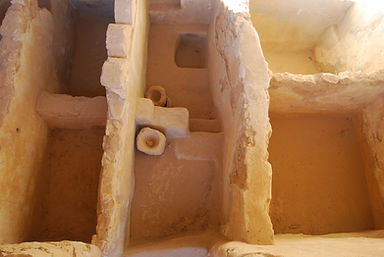
Archeological Finds
"The excessive scepticism shown toward the Bible by important historical schools of the eighteenth-and-nineteenth centuries, certain phases of which still appear periodically, has been progressively discredited. Discovery after discovery has established the accuracy of innumerable details, and has brought increased recognition to the value of the Bible as a source of history."
Archaeologist William F. Albright

Pool of Siloam, Jerusalem
Discovered in 2004. Jesus performed healing here (Jn 9:7)
(Source)

Ossary of High Priest
The ossary of Joseph Caiaphas was discovered in 1990. He was the high priest who presided over Jesus' trial in the gospels. The historian, Josephus also speaks of Caiaphas.
(Source)

Pool of Bethesda, Jerusalem
Jesus healed a paralytic here (John 5:2-9)
(Source)

Capernaum
Capernaum is mentioned 16 times in the gospels. It has been excavated and there is evidence of details in the gospels such as:
a synagogue
Roman presence
Peter's house
(Source).

Pontius Pilate
An inscription with Pilate's name. Discovered in 1961.
(Source)

Nazareth
Excavations done in Nazareth have shown that there was a small settlement here in Jesus' time.
(Source)

Herod
Herod is mentioned in Matthew. Josephus, a trusted historian also documents Herod. "Nothing in Matthew contradicts what other sources say about Herod, and he published his work first."
(Source)

Luke's 8 Historical Figures
Luke lists seven rulers and one other man in chapter 3:
-
Tiberius Caesar
-
Pontius Pilate
-
Herod tetrarch
-
Philip
-
Lysanias
-
Annas and Caiaphas,
-
John son of Zechariah
"The historicity of all eight figures is assured, and archaeological evidence plays its role here"
(Source)

Polytarchas
A Bible author, Luke talks about "Polytarchas" (an unusual Greek word translated: city rulers). Many thought he'd used the wrong word until an inscription was found on an arch in Thesalonica with this word: Polytarchas. (Dating: somewhere between 30 B.C. and A.D. 143). Therefore Luke's writing can be trusted.
(Source)
Do Archeological finds support what the New Testament tells us?
The pools of Bethesda and Siloam, inscriptions about characters, synagogues, towns, ossaries, palaces. All of these are examples that can be examined in great detail and which support the New Testament stories.